
Desk Back Pain in Bangkok: Why Sitting Hurts and What Actually Helps
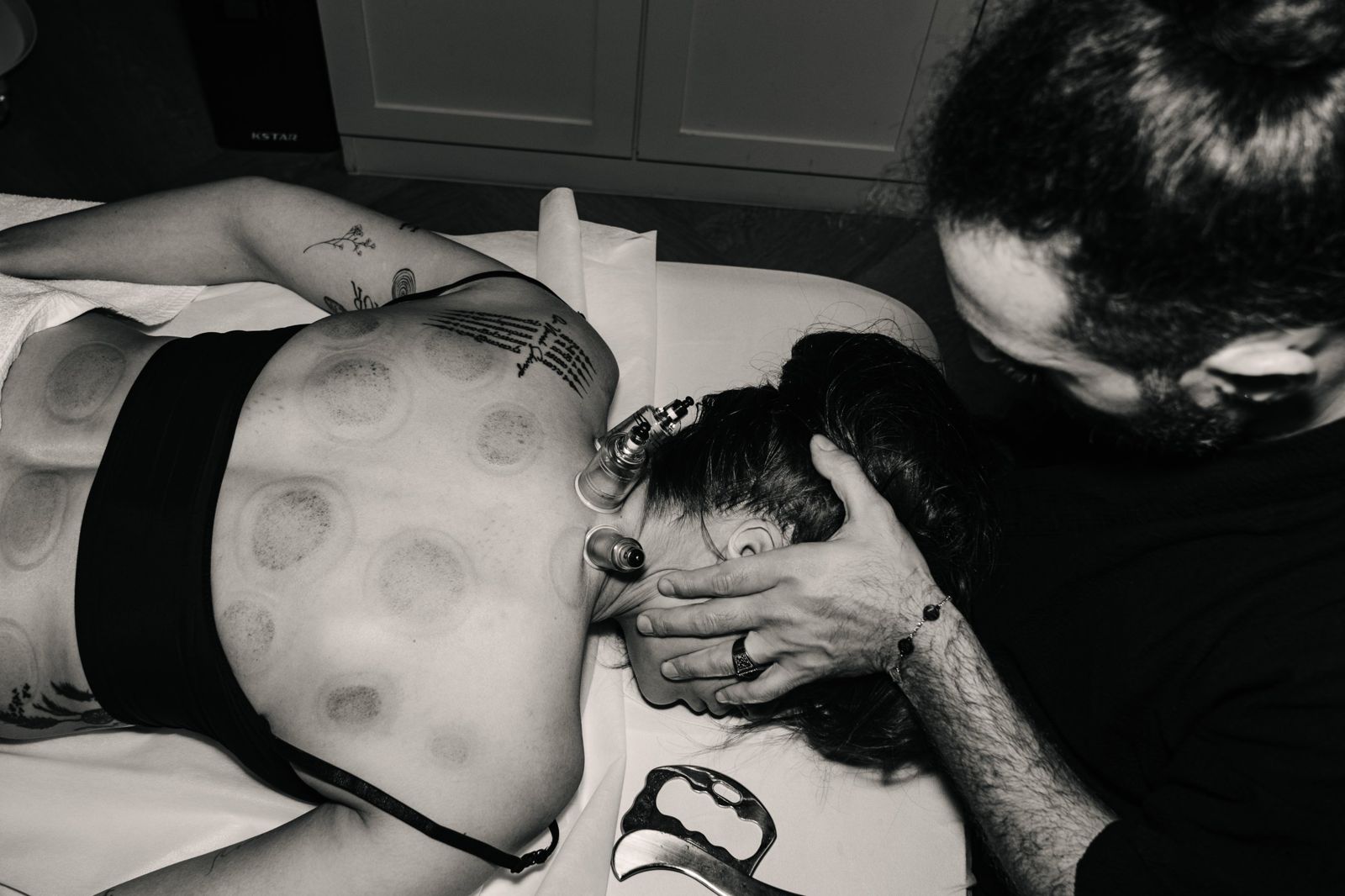
Many of the people I work with in Bangkok say the same thing in the first five minutes: "I don't know what I did. I just sit at my desk." That's often exactly the reason. The body is built to move, and eight or ten hours in one shape, followed by a sofa and a car seat, slowly teaches it to hold on. In Bangkok, long commutes in traffic and cold air-conditioned offices add to it.
Here is what I see happening, and what helps.
Why sitting hurts
When you sit for long stretches, a few things happen at once:
- The hips stay bent. The muscles at the front of the hips shorten, and they pull on the lower back when you stand up.
- The glutes switch off. Muscles that should support your pelvis do very little, so the lower back muscles take on work they were never meant to do.
- The upper back rounds. Shoulders roll forward towards the screen, the head drifts ahead, and the neck and upper back work all day just to hold it up.
- Breathing gets shallow. A rounded posture and a stressful inbox both push the breath up into the chest. The ribs stop moving, and the whole torso stiffens.
None of this is damage. It is the body adapting to how it is used. The good news is that it adapts back just as well.
Five things you can start today
- Move every 30–45 minutes. Stand up, walk to get water, and roll your shoulders. The best posture is your next one.
- Set up your screen at eye level. Use a laptop stand or a stack of books, plus a separate keyboard. Your head will stop chasing the screen.
- Sit on your sit bones, feet flat. Let the chair hold you rather than slumping into it. A small cushion behind the lower back can help.
- Breathe low, twice a day. Put one hand on your belly and take five slow breaths through the nose, letting the belly and ribs widen. It calms the nervous system and frees the ribs.
- Wake up the hips and glutes. Take a gentle hip-flexor stretch and do 10 glute bridges in the evening. Just a few minutes, done most days, beats one long gym session a week.
How I work with desk back pain
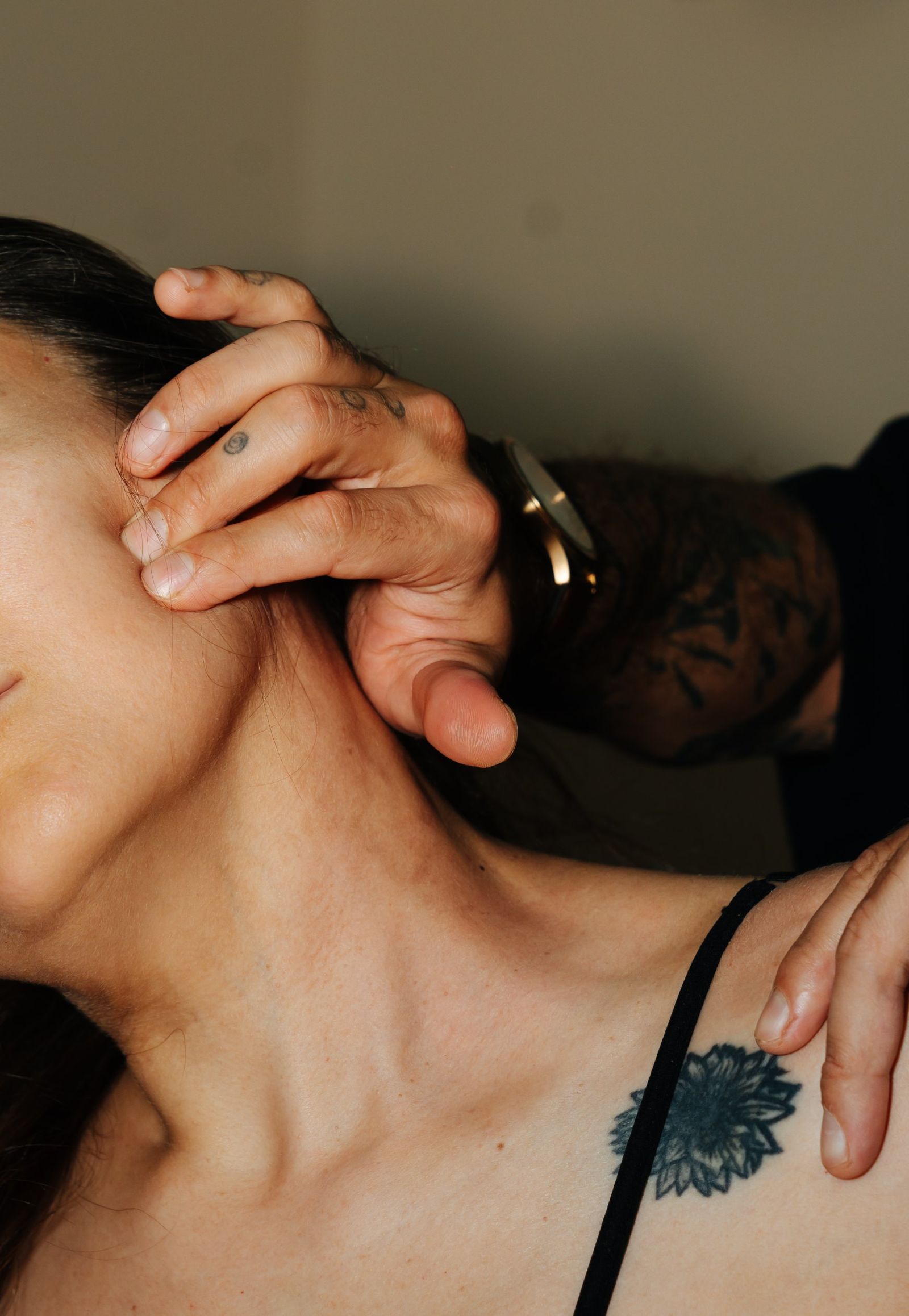
Many people come to me after scans, painkillers and other treatments haven't given them answers. Every body tells its own story, so I don't use a fixed protocol. A first session starts with listening: your work, your sleep, your stress, where it hurts and when. Then I work hands-on to release the tension the body has been holding. That can mean bodywork, cupping, tool-assisted release, assisted stretching and breathwork. Often the back is only where the pain shows, and the real story is in the hips, the ribs or the nervous system.
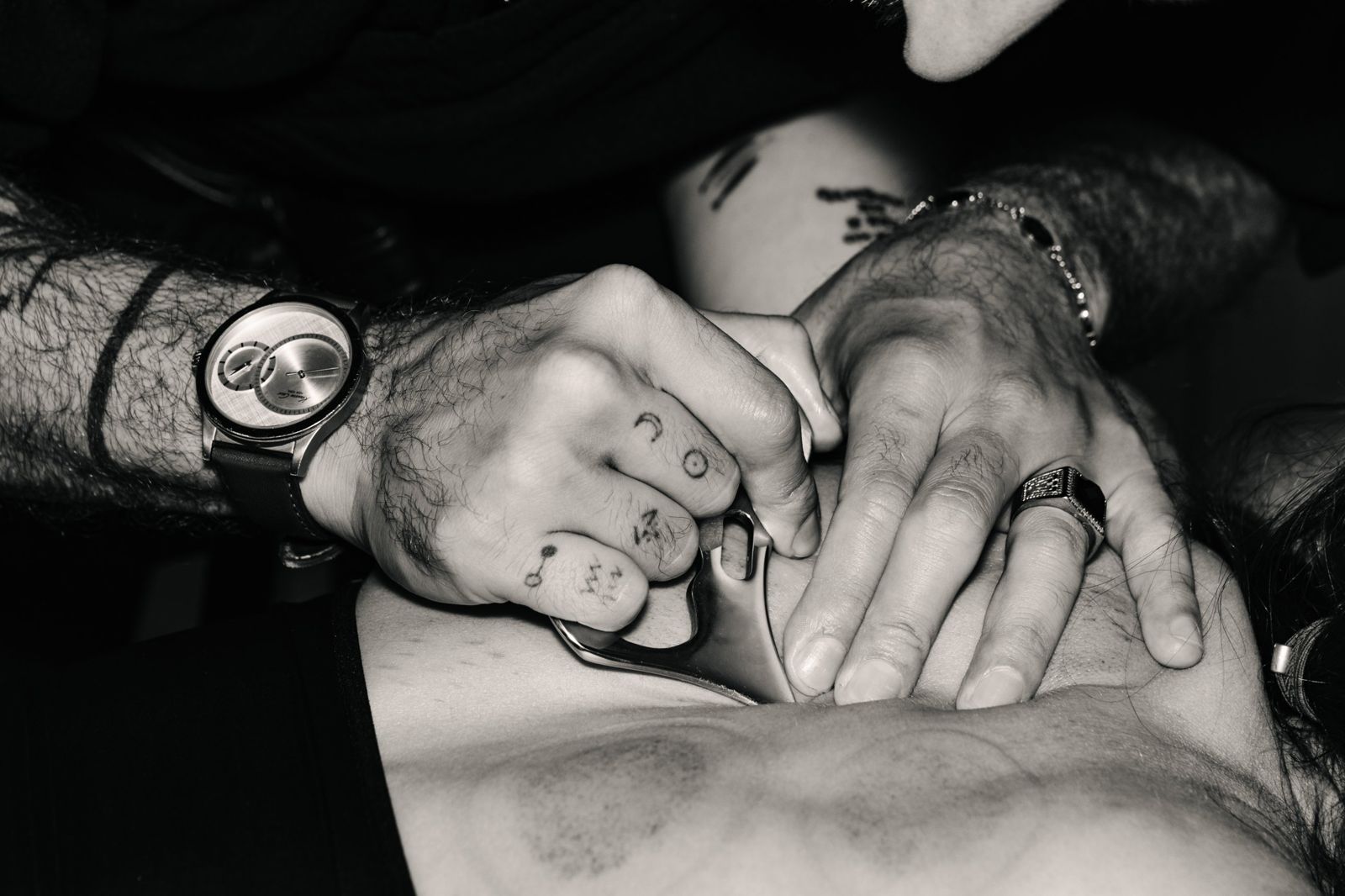
Release alone doesn't last if nothing changes. That's why I pair the bodywork with movement: a short routine for your desk days, and, for those who want to go further, training to build a stronger back. Many clients do both. A healing session resets the body, and a few training sessions teach it to stay that way.
A real example: ten hours a day at a desk
One of my regular clients is a textbook desk case. She works in marketing, sits for around 10 hours a day, and came to me with pain in her neck, shoulder, lower back and hip flexor, with the whole right side of her body affected. That one-sided pattern is common at a desk: the mouse hand, a screen slightly off-centre, or always crossing the same leg, repeated for years.
We work in two layers. First come regular releases to let go of the tension her body builds up at the desk. Then comes functional patterns training, which retrains the way she stands, walks and moves, so the tension builds up less in the first place. I have just completed Level8's Mastermind Fundamentals in movement therapy and biometrics optimisation, an intensive 32-hour course over four days taught by John Haddad, the movement therapist known for his work with Erling Haaland and Anthony Joshua. I'm now bringing what I learned into her sessions.
What has changed so far: she sleeps better, her pain is easing, her posture is improving and she breathes more freely. She is also bringing exercise back into her life. It's not a quick fix, but her body is learning a new way to hold itself, and that is what lasts.
Where to start
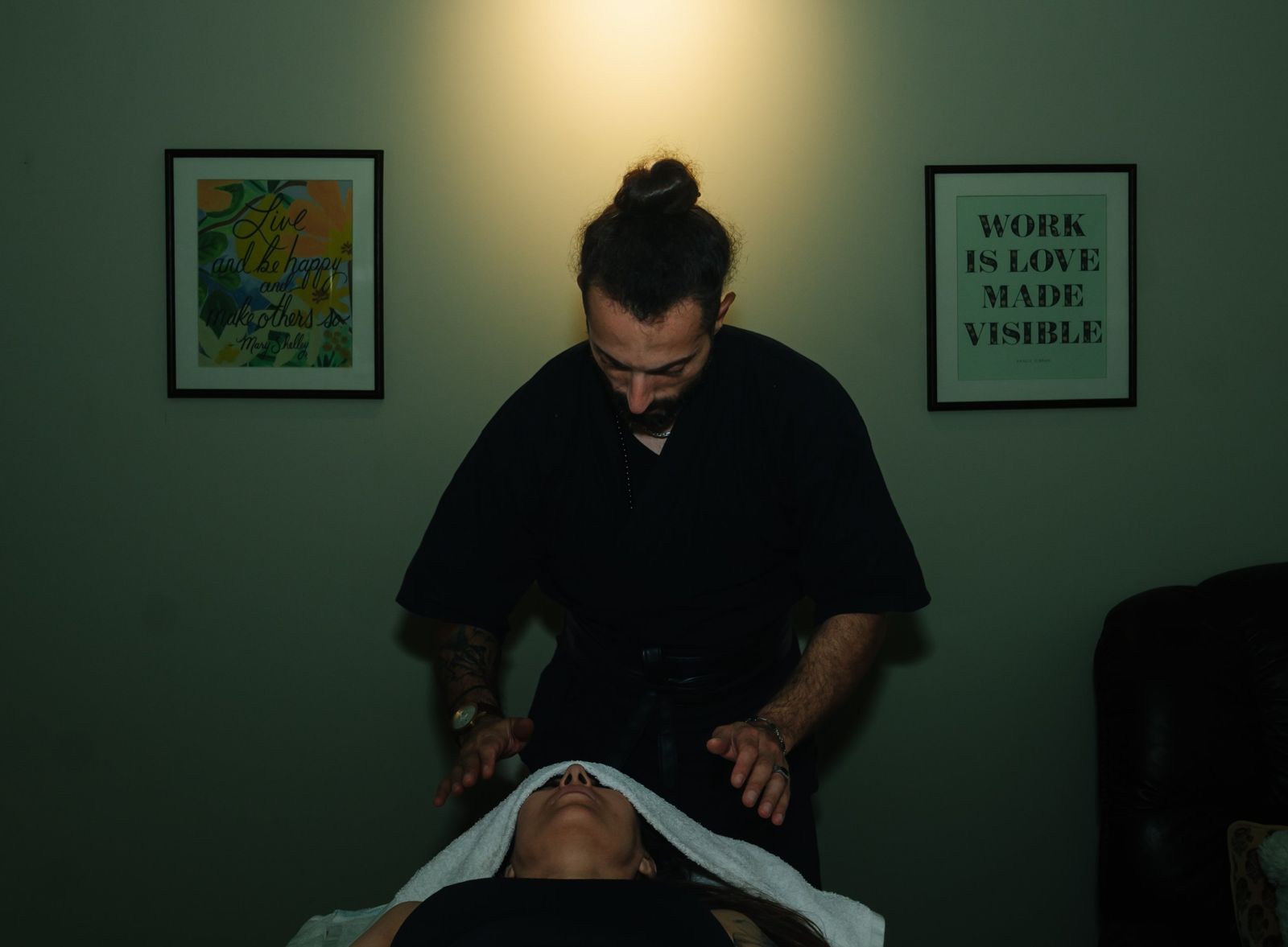
- Healing: a 2-hour Discovery Session (6,000 THB) is the best first step. It's a full assessment and treatment in one.
- Rehab and movement: 60-minute physical rehabilitation sessions (2,000 THB), in person in Bangkok or online.
If your back has been asking for attention, message me on WhatsApp or book through the website. Tell me a little about your day, and we'll find the right place to start.
Frequently asked questions
Why does my lower back hurt after sitting all day?
Can bodywork or massage fix desk back pain?
How many sessions will I need?
Where do sessions take place in Bangkok?
When should I see a doctor instead?
“When the body is heard, the soul begins to speak.”